
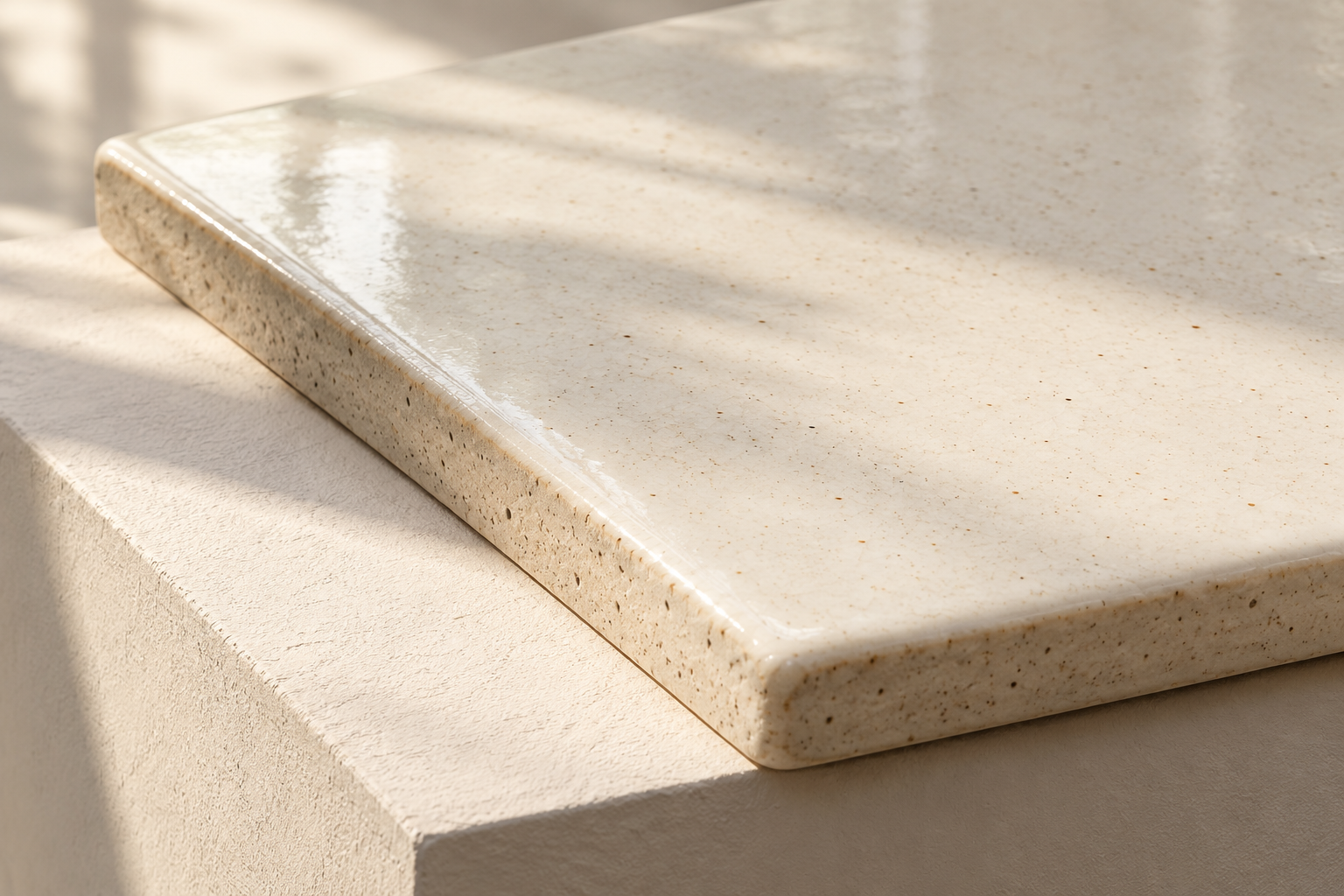
Know your ceramic surface
One material family, different surfaces
Check the delivery information for a matte, gloss, textured or other finish. Ceramic, sintered slabs and composite tops bonded to glass or other backing materials may need different care even when they look alike.
Care for the whole piece
Surface durability does not mean that edges, joints, adhesive layers and the base have the same resistance. Keep cleaning liquid out of connections and protect adjacent wood, metal and other materials.
Begin gently when unsure
If the finish is unknown, dust with a soft dry cloth and promptly blot fresh spills. Do not identify a material using acid, solvents or abrasion. Check compatibility before using a specialist care product.
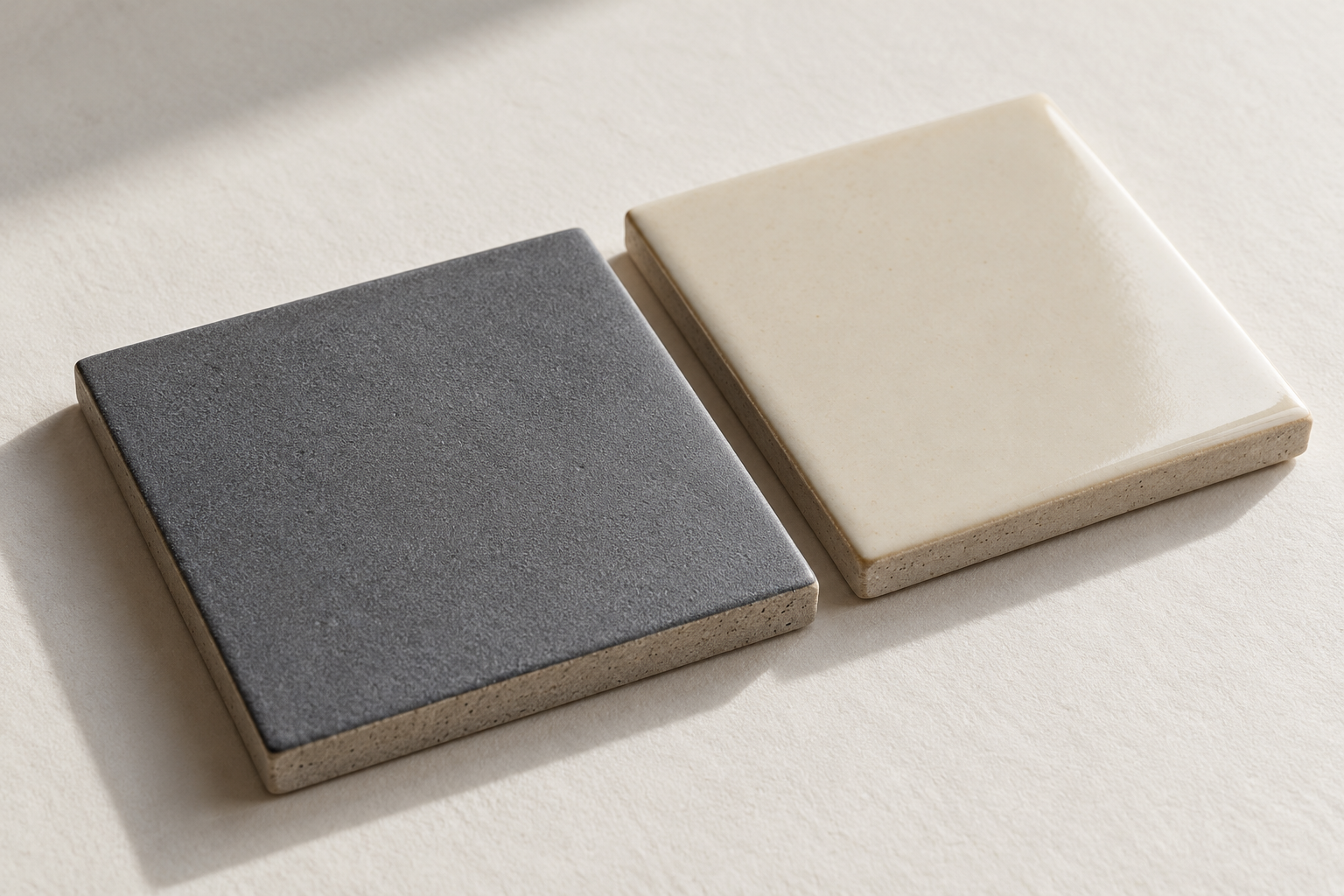
Everyday cleaning
01 / Remove loose particles
Lift away dust and crumbs with a soft dry cloth before damp cleaning. Avoid rubbing grit, ceramic fragments or metal particles across the surface.
02 / Use water and a neutral cleaner
For surfaces approved for damp cleaning, use lukewarm water and a little suitable pH-neutral cleaner with a soft colourfast cloth. Do not spray joints, the underside or fittings heavily.
03 / Remove residue and dry
Remove cleaner with a separate cloth lightly dampened with clean water, then dry. Wipe gently along surface texture. Keep dirty water away from edges, seams and backing layers.
Deal with spills promptly
Blot tea, coffee, oil and coloured liquids promptly, then clean gently. Stain resistance is no reason to leave spills in place; edges and joints still need protection from moisture.
A mark does not call for abrasion
If a mark persists or looks like metal transfer, stop rubbing harder. Do not try steel wool, blades, scouring powder, abrasive pads or strong acids or alkalis. Confirm the finish before choosing specialist treatment.
Do not add wax or gloss treatments
Do not apply wax, polish, oil or a stain protector simply to restore shine. Such treatments may leave a film or alter the feel. Use them only when the exact product instructions permit them.
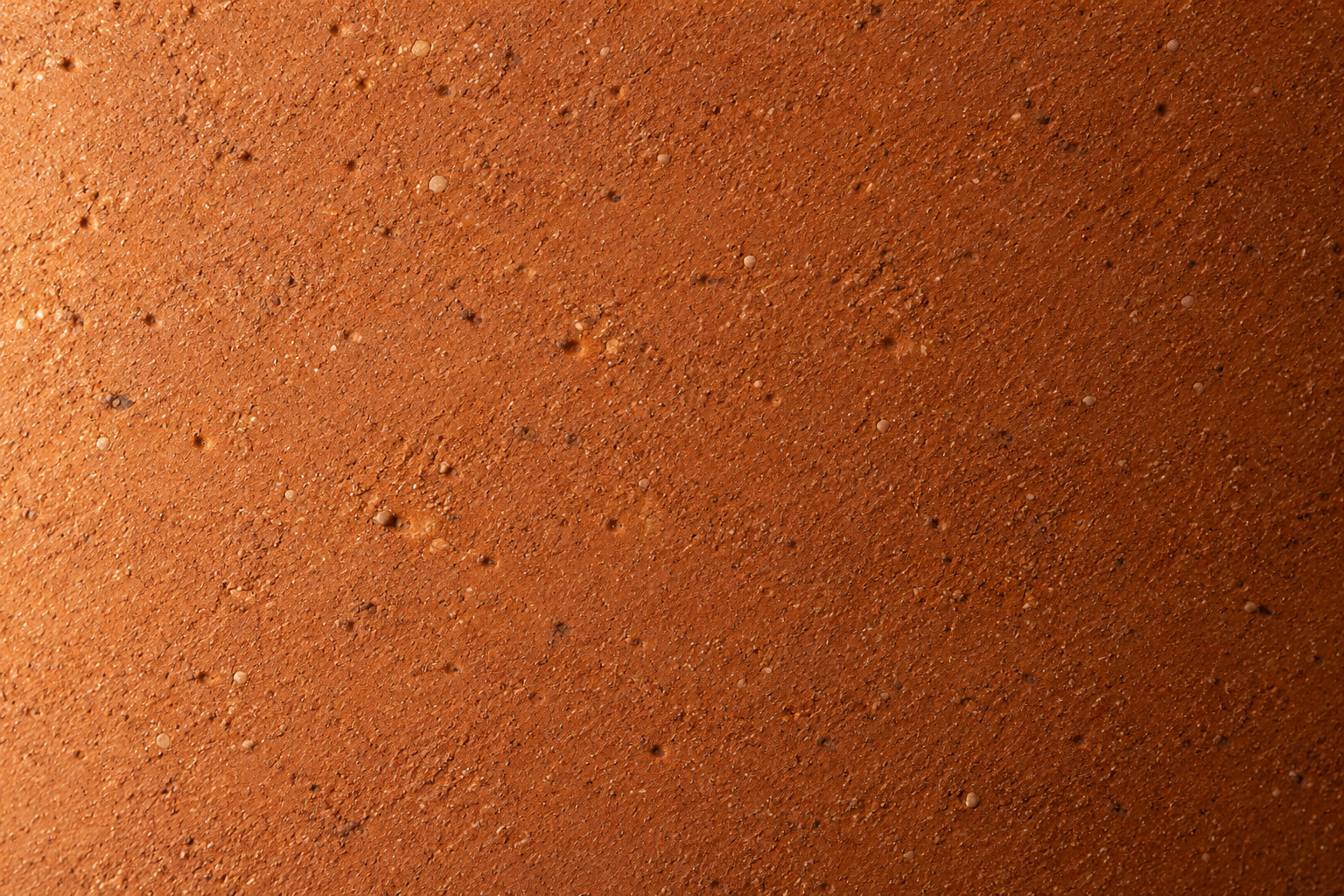
Material character and use
Character from firing
Colour, speckling, pattern and sheen may vary with glaze, firing and finishing. Use physical samples and delivery information to understand the expected variation; photographs do not replace checking the actual material.
Separate character from damage
An established, confirmed surface pattern is different from new chips, through-cracks, looseness or lifting. Stop using the piece and arrange inspection if there are sharp chips, spreading cracks or an unstable top.
Allow a buffer against heat
Use suitable heat protection under hot cookware, baking trays and heat-producing appliances. Avoid sudden heating or cooling. A firing temperature is not a heat or thermal-shock rating for the complete piece.
Protect edges from impact and point loads
Lift objects rather than dragging rough bases. Do not cut or strike directly on the top, or sit or stand on the surface or an overhanging edge. Follow the load limits for the exact model.
Check support during installation
Have suitable personnel follow the model instructions using the specified supports, pads and fittings. Tighten as directed; do not add adhesive, drill holes or modify the base. Pause installation if parts are missing or support is uneven.
Moving and placement
Protect corners and use enough people when moving. Do not drag the piece or lift the complete item by the top alone. Remove a top only as instructed and with suitable handling. Outdoor use requires approval for the complete product.
Care reminders & support
Stop use before inspection
Stop using the piece and keep people clear of broken or sharp areas, a top separating from its support, or loose connections. Do not test safety by loading it, gluing a break or grinding an edge.
Record what happened
Take overall, surface and edge photographs. Note when the mark appeared, what contacted it, any temperature change and treatment attempted. Preserve the condition if unsure, and do not layer different cleaners.
When you need advice
If you are unsure how to proceed, ask Dak Haan customer service or the staff at your place of purchase for advice before treatment. Provide your order, material and finish details, overall and close-up photographs, and any cleaning products or treatment already used.
Keep your care information
Keep this guide, the material information and the product-specific assembly and use instructions for future care, moving and service.