
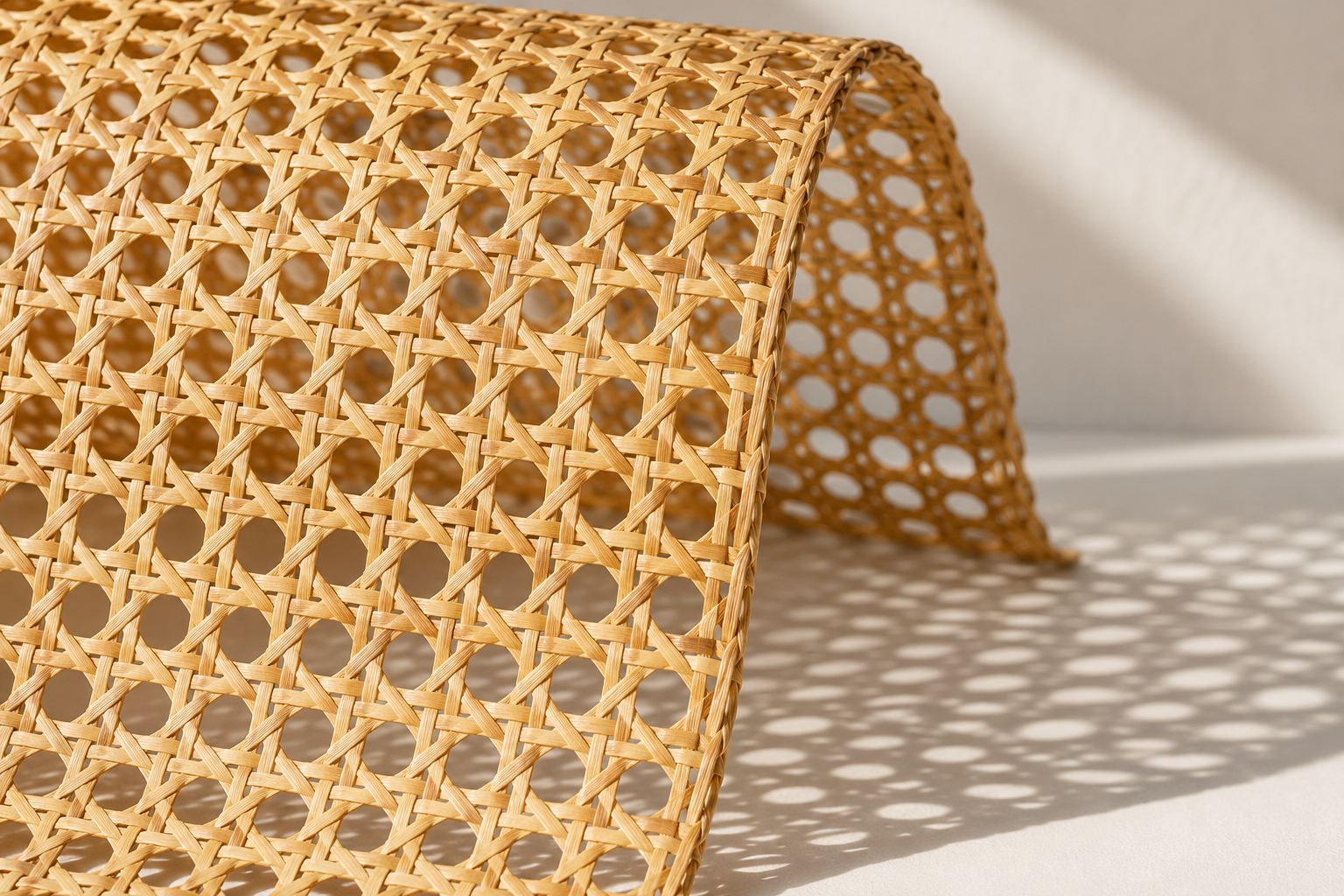
Identify the woven material
Natural rattan and synthetic wicker
Natural rattan cane, cane webbing and resin wicker behave differently. Paper cord, seagrass and textile rope are not interchangeable with rattan. Confirm the material from the order and delivery information, not water, burning or scratch tests.
Treat weave and frame separately
One piece may combine lacquered cane, natural webbing and a wood or metal frame. Protect neighbouring materials and joints during spot cleaning. Remove and care for cushions separately where the model instructions allow.
Begin with indoor use
Keep natural rattan indoors in a ventilated space with reasonably stable conditions. An outdoor appearance does not make it suitable for rain, exposed terraces or damp pool areas. Outdoor use requires approval for the exact model.
Everyday cleaning
01 / Dust the weave
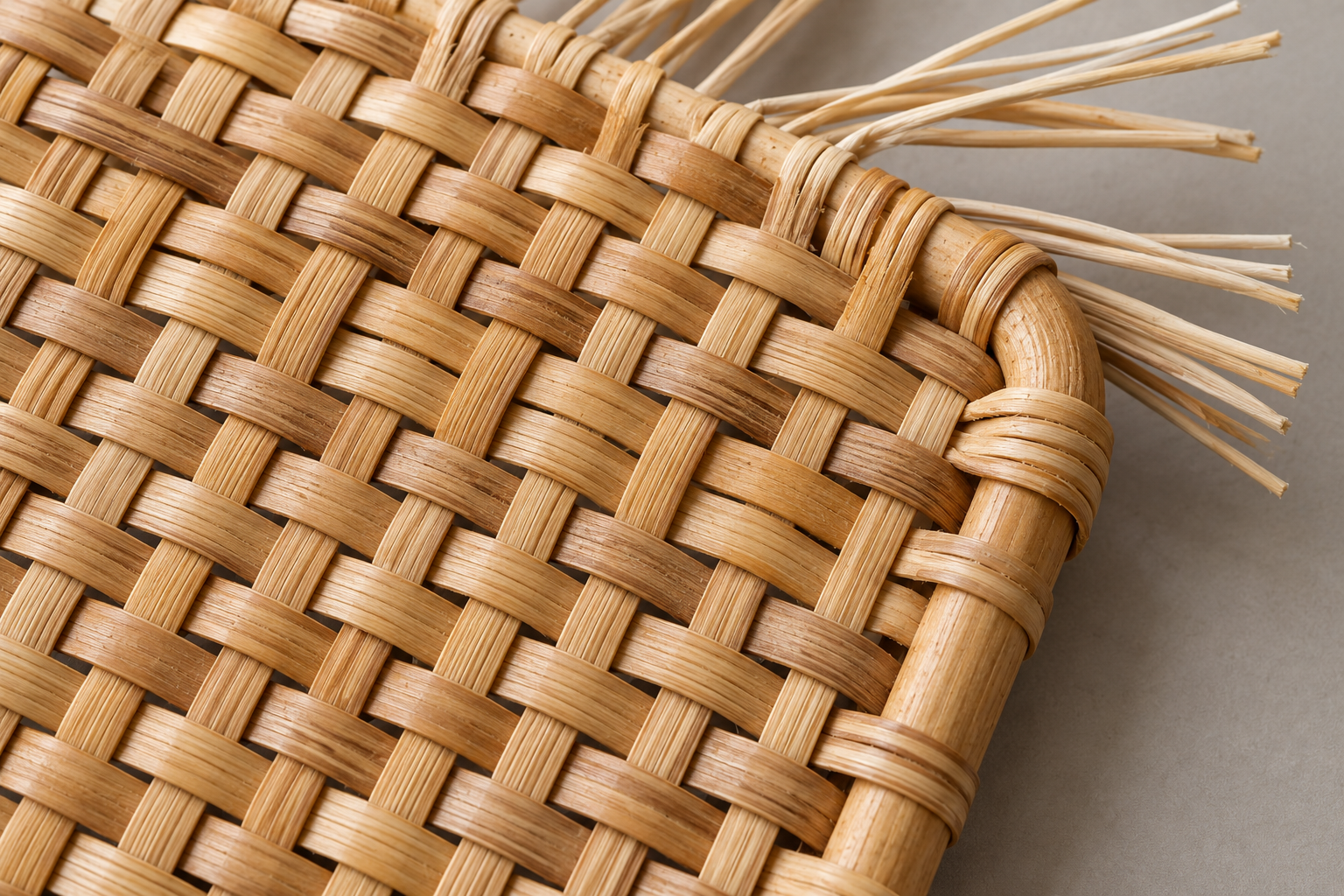
Use a soft brush or a low-suction vacuum with a soft brush attachment, following the weave. Keep hard nozzle edges from pulling on strands, joints or bindings.
02 / Wipe gently in small areas
Where damp cleaning is permitted, wipe gently with a well-wrung soft colourfast cloth. Use a little compatible pH-neutral cleaner only when needed. Keep liquid out of the frame, glued joints and openings.
03 / Let it dry naturally
Remove remaining moisture and let the piece air-dry in a ventilated place. Do not speed drying with hot air, heaters or strong sun. Do not sit on a damp-cleaned cane seat until it is completely dry.
Blot coloured spills promptly
Blot spilled drinks, oils or cosmetics with a clean absorbent cloth rather than spreading them by rubbing. Do not bleach, recolour or use solvents on stains that have entered the fibres.
Do not soak or pressure-wash
Avoid soaking, hosing, steam and pressure washing. Cleaning the weave does not mean washing the entire piece: water may affect the frame, glued joints, finish and cushions.
Do not apply a universal oiling routine
Care varies between cane, webbing and lacquered finishes. Do not routinely apply lemon oil, mineral oil or wax, or mist the weave. Follow such treatment only when the exact product instructions specify where, how much and how to dry it.
Natural character and use
Natural colour and handwoven variation
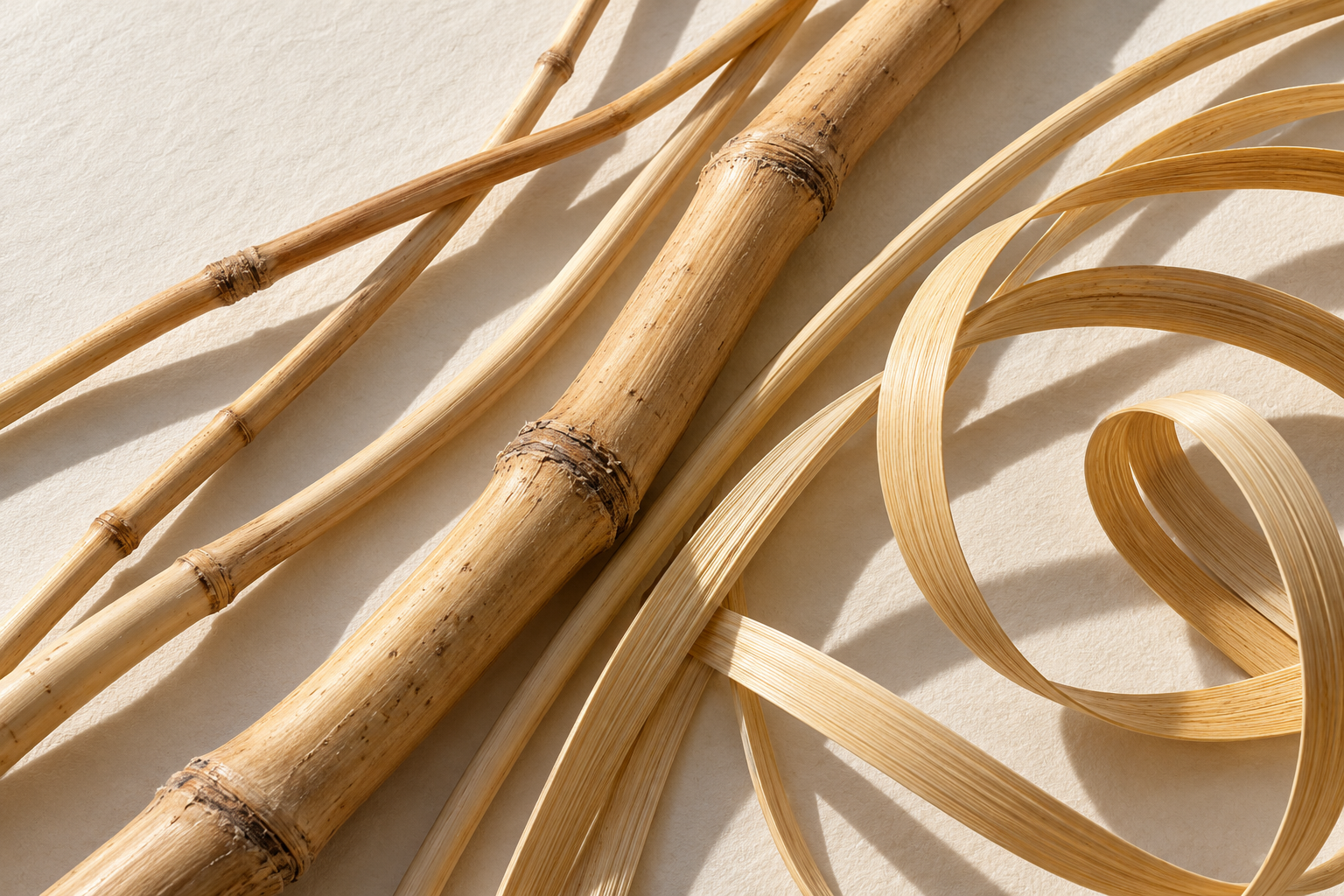
Natural rattan may vary in colour, strand width, nodes and sheen. Spacing and end details may also vary in handwoven work. Use the agreed sample to understand the range rather than expecting machine-identical surfaces.
Flexibility is not a point-load allowance
Some flexibility may be present in normal use. Sit as intended and spread the load. Do not stand, kneel or step on the weave, or press it with sharp or hard objects. Backrests and armrests are not seats.
Check sagging and broken strands
Gradual colour change is different from persistent sagging, broken or loose strands, sharp fibres or a musty smell. Stop loading or sitting on an affected area and seek assessment rather than assuming every change is normal.
Avoid sun, heat and damp
Keep away from prolonged direct sun, heating vents and concentrated heat, and avoid damp walls. Do not compensate for a dry room by spraying the piece; first improve its position and the room conditions.
Lift by the sound frame
Remove loose cushions and objects before moving. Lift together by sound structural parts, not the woven panel, bindings or backrest. Follow model instructions for assembly and fittings; do not add nails or pull the webbing tighter.
Use suitable repair expertise
Do not cut load-bearing broken strands, tape them up and keep sitting, or dismantle and retension the weave yourself. Binding repairs, webbing replacement and frame repairs need expertise suited to the structure.
Care reminders & support
Stop loading an affected seat
Stop sitting on a seat with marked sagging, broken cane, a loose frame or sharp fibres, and prevent snagging. Do not test recovery by loading it again, retensioning it or adding moisture.
Check the setting if mould or odour appears
Keep the piece apart from other items, ventilate and stop wetting, covering or repeatedly damp-wiping it. Do not mix bleach, alcohol or mould removers. Record any damp exposure and ask for treatment advice.
When you need advice
If you are unsure how to proceed, ask Dak Haan customer service or the staff at your place of purchase for advice before treatment. Provide your order, material and finish details, overall and close-up photographs, and any cleaning products or treatment already used.
Keep your care information
Keep this guide, the material information and the product-specific assembly and use instructions for future care, moving and service.