
CARE & USE · v0.6
Wood veneer care guide
Know the construction. Protect the thin wood face.
Daily care and use
Identify material and finish
Check the order for solid wood or veneer and its lacquered or oiled finish. If unknown, gently dry-dust only; do not test oils, waxes or sanding.
Dust gently with the grain
Use a clean soft cloth and dust gently with the grain after removing grit. Do not use abrasive pads or steel wool.
Wipe lightly and dry
Where damp wiping is confirmed as suitable, use a well-wrung soft cloth and dry immediately. Use only a cleaner compatible with the finish; do not spray furniture directly.
Blot spills promptly
Blot spilled liquids promptly without spreading them or leaving them to sit. Pay attention to joints, end surfaces, openings and edges.
Protect from heat and moisture
Use clean coasters, placemats and trivets. Lift objects instead of dragging them. Do not leave damp objects or plant pots directly on the surface.
Placement and moving
Keep away from heat, prolonged direct sun and persistent dampness. Empty the piece and support its load-bearing parts when moving. Do not drag legs or lift by thin edges.
Confirm before using care products
Confirm care products, oiling and refinishing for the exact material and finish; there is no universal recipe for all wooden furniture.
Construction and finish care
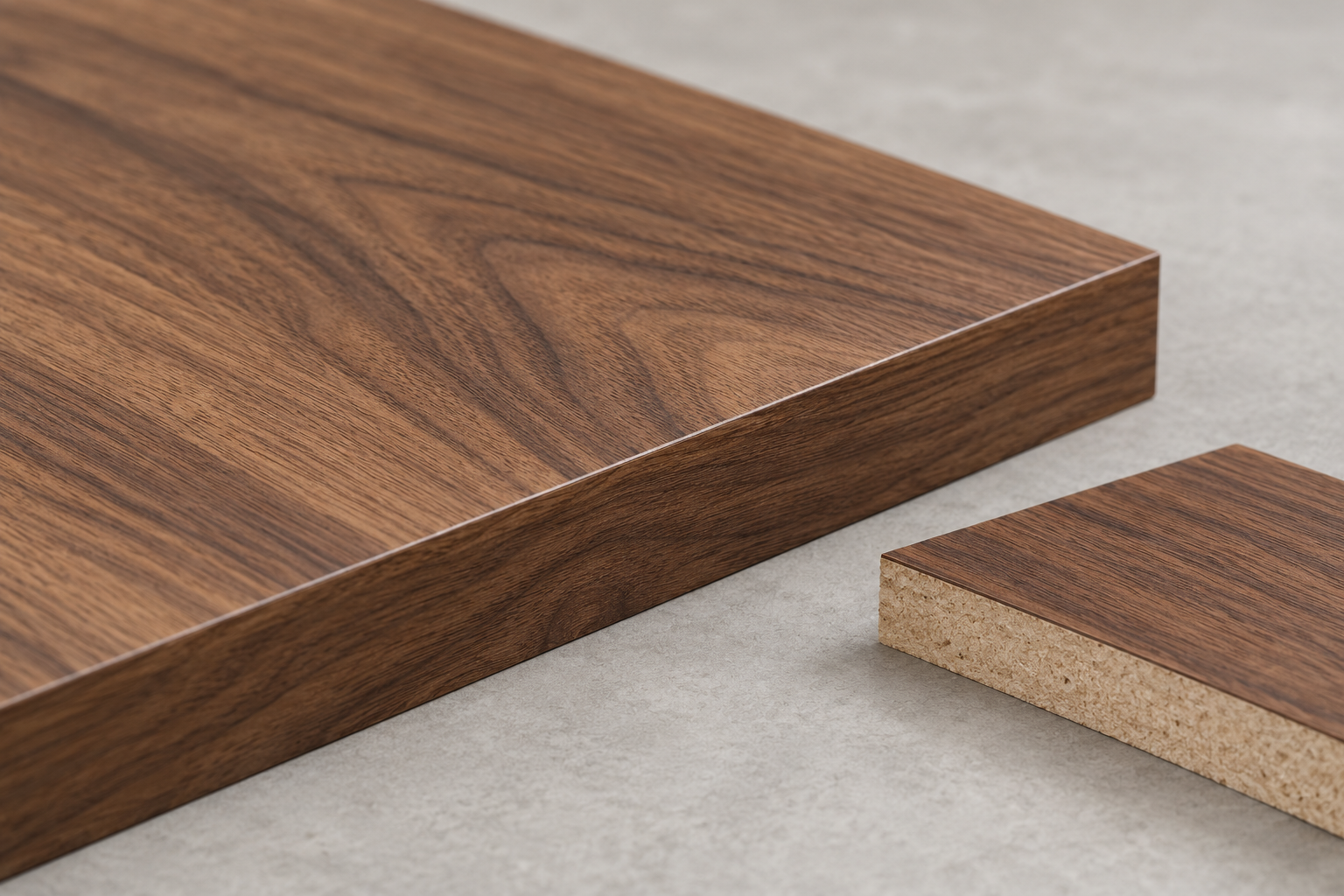
Veneer is a real wood face
Veneer is generally a thin real-wood face bonded to a substrate; thickness and construction vary. It should not be treated as thick timber that can be repeatedly sanded.
Care for the actual lacquer
Clean lacquered veneer gently with a compatible method and dry it. A clear finish does not prevent prolonged moisture entering through edges or joints.
Keep edges and joints dry
Avoid leaving wet cloths, using steam or allowing water or cleaner into edges. Keep undersides and surfaces near walls free from persistent dampness too.
Do not sand or saturate
Do not try to remove marks with sandpaper, abrasive sponges or generous amounts of oil or wax. Worn-through or water-damaged faces may not recover through simple care.
Record damage before repair
If edges lift, blister, delaminate or lose material, do not press, peel, heat or glue them yourself. Record the location and what happened.
Confirm oiled veneer separately
If documents specify oiled veneer, follow that product instruction only. Visible grain is not permission to oil it or apply solid-wood sanding methods.
Preserve the thin wood face
Assess the actual construction and coating before repair; do not directly apply solid-wood refinishing methods to veneer.
Understanding the character of wood
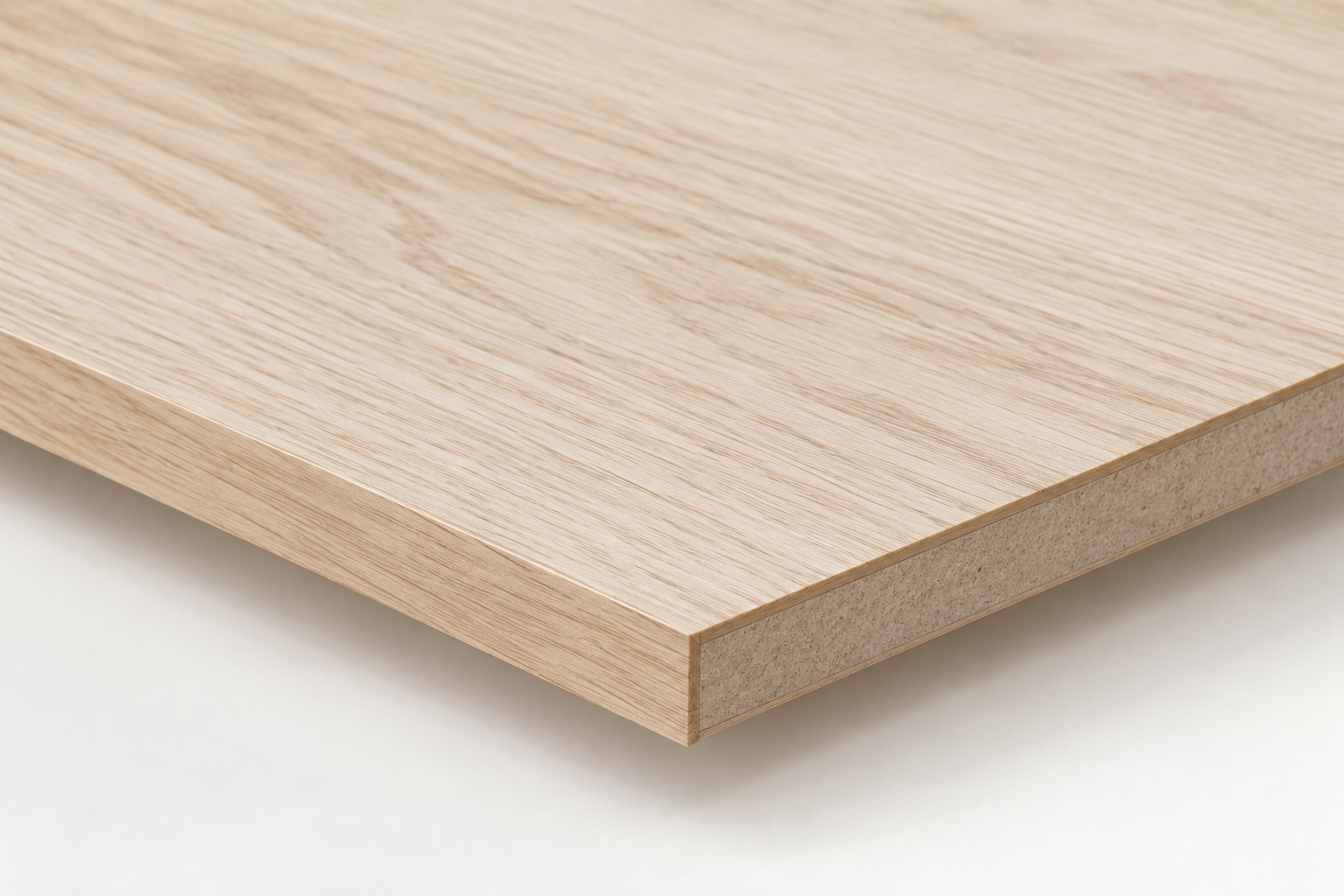
Grain and tone vary
Real wood varies in grain, pores and tone across the material. A sample represents the material, not an identical pattern on every panel.
Discuss matching and selection
Board joints, veneer matching and grain arrangement depend on the design. Discuss visible joints, grain direction and expected variation before purchase.
Light changes colour
Wood may change tone with light and time. Avoid prolonged concentrated sunlight and occasionally move objects to reduce strong differences caused by constant shading.
Responding to the environment
Wood responds to changes in environmental moisture. Keep indoor conditions reasonably stable, away from hot air and persistent dampness. Do not add water directly to correct a change.
Changes that need inspection
Rapidly growing cracks, pronounced warping, loose joints or blistering and delamination need investigation; they cannot all be attributed to natural character.
Choose with an understanding
View samples and suitable care methods before purchase and retain delivery photographs. If unsure how to proceed, ask Dak Haan customer service or your sales contact first.
Natural character is not a diagnosis
This page explains the material. Assess a specific problem against the product, finish and conditions of use.
Care reminders & advice
Scope
Use this guide for the applicable material and model. Follow the product documents for assembly and special care. Ask for advice if unsure.
Pause if a problem appears
Stop self-treatment if distortion, looseness, spreading cracks or finish problems appear. Stop use if support or safety may be affected.
Ask before treatment
If you are unsure how to proceed, ask Dak Haan customer service or the staff at your place of purchase for advice before treatment. Provide your order, photographs and care products used.
Keep your product information
Keep this booklet, the material information and the product-specific installation and use instructions for future care and advice.